
Most people enter the Brisbane City Botanic Gardens from the city side, follow the river for a while, then turn back when it feels far enough. It is a pleasant circuit, but rarely a memorable one. The pace stays steady, the paths feel familiar, and very little asks for attention.
What often goes unnoticed is that the Gardens were never designed as a single walk. They were built in stages, reshaped after floods, replanted when early experiments failed, and adjusted as Brisbane’s priorities changed. Those decisions are still visible, but only if you stop treating the space as one continuous green area.
When you move through with intention, patterns begin to appear. Some sections feel open and resilient. Others feel controlled and temporary. The shifts between them reflect how the Gardens have been used and rebuilt over time. Seen this way, the Gardens stop functioning as a route and start behaving like a sequence of places, each with a reason for existing.
What Most Visitors Miss
One of the clearest transitions sits between the river-facing lawns and the more structured beds closer to the city. Along the river, plantings are spaced wide and open, shaped as much by flood recovery as by design. As you move inland, paths straighten, spacing tightens, and plant groupings become more deliberate.
Near the Bamboo Grove, the change is immediate. The temperature drops, sound softens, and light thins, even though you are only metres from open lawn. This area was designed to test dense planting in Brisbane’s climate, not simply to create atmosphere. Most people pass through quickly without noticing how different it feels.
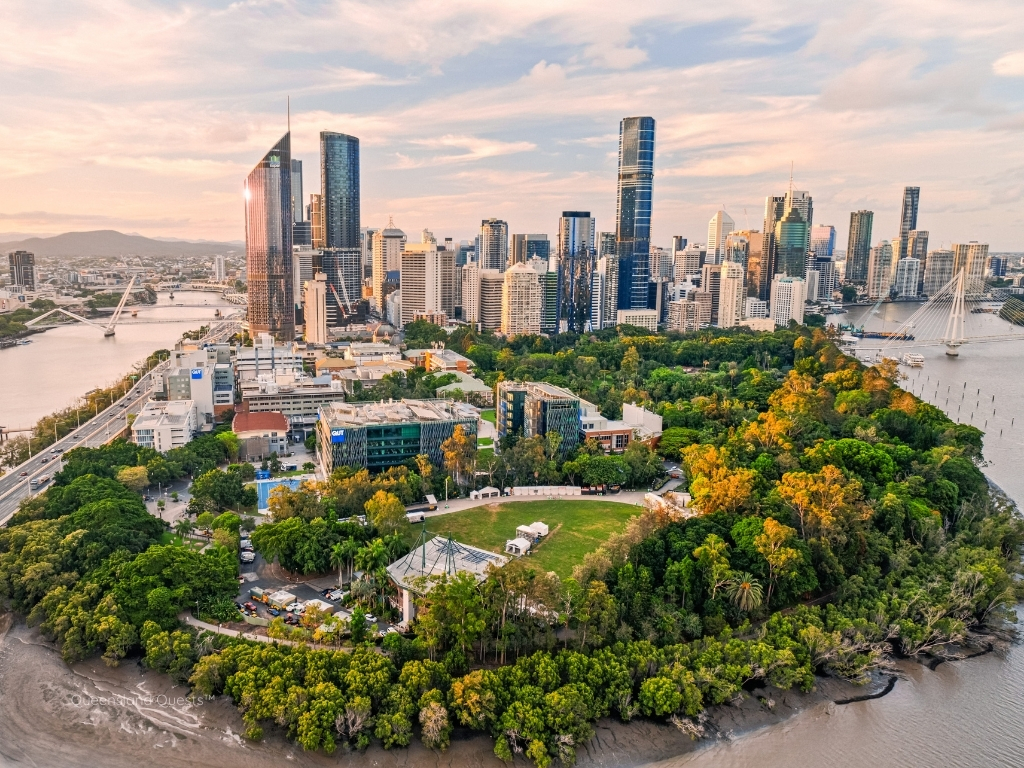
There are also several points where the Gardens quietly turn your attention back toward the city. Along bends near the river path, breaks in the planting frame the skyline directly, placing office towers and historic buildings in contrast with the greenery. These views reinforce the Gardens’ role as a buffer between the city and the river, rather than a retreat from both.
Natural Waypoints and Story Hooks Through the Gardens
Certain locations slow people down without signage or explanation.
Near the Edward Street edge, the alignment of the river path draws your view back toward the CBD, reminding you how tightly this green space sits within the city. Older trees nearby force paths to curve around exposed roots, signalling areas that predate later redesigns. The ground rises and falls subtly, shaped by flood history rather than landscaping trends.
Closer to the ornamental ponds, movement changes again. Paths narrow, sightlines shorten, and people linger. These spaces were designed to encourage stopping rather than passing through, and they still perform that role today.
Taken together, these waypoints form a loose narrative. You move from openness to enclosure, from utility to display, from river edge to civic garden, and back again.
Seeing the Gardens as a Quest, Not a Route
Approaching the Gardens as a Quest changes how you move through them. Instead of aiming to complete a loop, you begin responding to what you notice.
The mature fig trees near the river are a good example. Their exposed roots are the result of age, shifting soil, and repeated flooding. Paths bend around them because the trees came first. Once you recognise that relationship, the layout stops feeling decorative and starts making sense.
Public artworks scattered through the Gardens often sit near junctions where people hesitate or change direction. They are easy to overlook when you are focused on getting somewhere. When treated as part of a Quest, they act as markers, prompting you to pause and reassess where you are.
Floral displays closer to the city side tell a different story again. These areas are tightly managed, seasonal, and clearly curated. Beds change regularly, unlike the long-established plantings near the river. The contrast reflects the Gardens’ dual role as both experimental ground and civic showcase.
A Quest approach encourages you to connect these observations. Why does one area feel resilient while another feels temporary? Why do artworks sit at transitions rather than destinations? Why are some trees protected at all costs while others are quietly replaced?
The value lies in noticing, not in being told.
Turning a Visit Into an Experience You Remember
Once you start experiencing the Brisbane City Botanic Gardens this way, it becomes difficult to return to walking without intention. Curiosity builds, and leaving without following it feels unfinished.
A self-guided Quest gives structure to that attention. It does not replace wandering, but it sharpens it. You are prompted to look more closely, connect one area to the next, and move through the Gardens with a sense of progression rather than repetition.
For some visitors, this turns a familiar lunchtime walk into something more engaging. For others, it offers an easy way to explore the city with friends, older children, or visiting family members who prefer doing to watching. The aim is not speed or difficulty. It is noticing more, remembering more, and leaving with a clearer sense of where you have been.